May I wish you a peaceful Christmas and all my thanks for your support for British Sea buckthorn over 2022. Let us all look forward to making next year a memorable one that sees a brighter future for humanity and our planet.
Happy Christmas.
May I wish you a peaceful Christmas and all my thanks for your support for British Sea buckthorn over 2022. Let us all look forward to making next year a memorable one that sees a brighter future for humanity and our planet.
Happy Christmas.
Goodbye 2022 – Christmas is approaching and it is a time for reflection and promise of better things to come.
This year we saw temperatures in the UK soar to 40 deg. C. It came within a long summer drought. There have been droughts before, but the high temperature signposted a climate change issue for the future.
On the land, drought impacts deep into the soil. Soil is the heart of the countryside. Above ground we focus on plants and trees, but below ground we have little knowledge of a complex world from which our crops – and our food, comes from. It is silent and unseen, but it is vibrant; active and diverse. It provides the nutrients for our plants. It can be used as an asset to improve the quality of our food; store and control the water from rainfall; be the backbone that delivers the health of all things in the countryside.
Within the complex world that we live, we choose how to manage our lives. As farmers, science has directed us to use chemicals to control pests and increase crop yields that can be delivered at lower cost. 40 deg C this summer was a signpost of climate change. It can be logged as a statistic, or reflected on as to its meaning.
Decisions one takes on a personal basis. For me, as a farmer – and grower of sea buckthorn, the 40 deg statistic I see as a threat that will dry up my soils, crops, grass for livestock, habitat for wildlife. I see it as a challenge and an opportunity for change.
My son, Ben, suggested I should go to an agricultural event this summer called Groundswell. I had not been before and was not prepared for the outcome.
It was a dynamic show, full of enthusiastic people with innovation at the front of their thinking. Agriculture is often portrayed as full of aging farmers with few people joining the industry. Here at Groundswell was inspiration. Inspiration that was real, creative and active. A signpost for me that taking up the opportunity for change is worthwhile.
So what was the outcome?
Back in the summer, the drought had had a profound impact on the sea buckthorn. This year our Siberian plants produced berries – but long before they were ripe, thirsty wildlife striped the plants of the crop. Our Latvian plants, which have been reliable were stressed by lack of water. Their crop was small and later ripening varieties had almost no crop. Our german varieties ripened earlier than usual, but the berries were small.
I have not installed irrigation as up until now the plants have not needed it, and water is a precious resource that if overused can fill fruit with water and dilute nutritional quality. This season’s drought and high temperature indicates that if high temperatures are coming with climate change, then we have to change the ways we farm.
So as 2022 comes to an end, with the war in Ukraine still waging. With high energy and inflation impacting into everything we do – 2022 has to be the year to trigger change.
The decision therefore has been to change the way we farm. We are going organic. I do not say this lightly. It means a huge change needing new skills, new machinery, new buildings, new crops, new ways of manging our precious soil. It is daunting to be doing this at a time of economic instability, but that will ease. But I do not believe climate change will ease. Going organic is a long term project – 10, possibly 12 years to regaining the vibrancy of our soils. A long time, but it is no longer than it has taken to understand how to grow sea buckthorn.
And the sea buckthorn – what of it? What to do? We are lucky that the European sea buckthorn growers are, like those at groundswell, a dynamic group. There have been three on-line conferences providing the opportunity to share knowledge.
So like the farm – for sea buckthorn at Devereux farm – 2022 is a time for change. Time to decide which varieties have been successful and which not. Time to decide on how to lay out orchards that provide for a crop that can thrive in an extreme, changing climate.
So many old plants are going to be pulled up and replanted with new. With varieties that produce the fruit that we believe our customers like best.
Without customers we would not have a purpose. I find that our customers – like those attending groundswell, they know what they want. Many have a desire for the sea buckthorn they ate in other countries. Many understand this special fruit for its taste; its nutritional quality; its potential to inspire new culinary innovation.
So as 2022 comes to an end, I look forward to 2023 with a passion for change. Change that I hope will provide a future for our soil; our countryside; our crops and providing something special for our customers.
As you have now read this, the chances are you are one of our customers, if not you will have an interest in sea buckthorn. For both reasons may I thank you and wish you too, a happy Christmas and let us hope that 2023 brings stability and peace to a world that has many issues to solve.
Happy Christmas
One last thing – I am afraid that last orders for sea buckthorn berries has to be drawn to a close for 2022.
LAST ORDERS WILL BE ON DECEMBER 19th for delivery on DECEMBER 20th.
2023 I will be writing a short blog each week as our new farm emerges – new orders for sea buckthorn berries will start in January.
THANK YOU FOR ALL YOUR SUPPORT IN 2022.
A December message from our nutritionist Lucy Williamson.
As we head into winter it’s important to choose foods which help to keep our immune system strong! What kind of food? Real, minimally processed and from healthy soils meaning it’s packed with nutrients for us.
Organic seabuckthorn berries really tick the box here; let me explain why –
Why Organic?
Crops grown organically have to rely on their own chemical defence mechanisms to fight off bugs. So these ‘phytochemicals’, which we know as ‘antioxidants’ are higher in organically grown plants, compared to crops which may have been sprayed with a fungicide for example. Brightly coloured berries are rich in health-giving antioxidants, none more so than bright orange organic, seabuckthorn berries with over 190 nutrients! Their antioxidants help us to maintain a healthy immune system as well as benefit from all their anti-ageing functions.
What about Gut Health?
Even pre-Covid, we humans have been a little carried away with sterilising our world. Many microbes (tiny, microscopic organisms like bacteria) are actually vital for our health rather than being ‘bad’. Our billions of gut microbes which we each have, are essential for a strong immune system as well as many other benefits to our long-term health. The same goes for healthy, organic soils in which our crops grow; microbes here unlock nutrients for the plants, just as our own gut microbes unlock nutrients in our food. They actually activate antioxidants for us, so eating organic, antioxidant-rich food nurtures our gut health too! The fibre in seabuckthorn also feeds our gut microbes – they get their energy from fermenting this otherwise indigestible fibre for us.
Is Seabuckthorn a good source of healthy vitamins?
Although it varies according to harvest times and conditions, Seabuckthorn berries contain about 10 times as much Vitamin C as an orange! Vitamin C is an antioxidant which is why it’s so important for our immunity. Seabuckthorn berries get their bright orange colour from carotenoids, a type of Vitamin A, which together with Vitamin E, also high in these orange berries of goodness, look after our immune systems too. We also know from research that these nutrients are easier for our body to absorb when in their natural food.
Real food
At the start I mentioned ‘real, minimally processed’ foods. At Devereaux Farm, seabuckthorn berries are frozen immediately on harvesting, locking the nutrients in. Compare this to a preserved fruit purée where nutrients are lost as well as additives put in! You can order seabuckthorn berries directly from the farm – fresh as the day they were picked without long food supply chains draining away nutrients in transit. Enjoy them as you would blueberries or try the dried version in this winter warming red cabbage recipe!
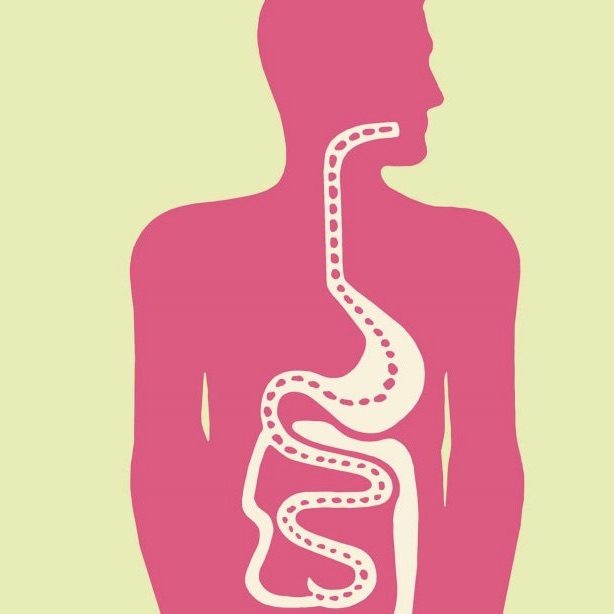
My job as a Registered Nutritionist is to guide great food choices for long-term health. So I’m never happier when communicating how the food we eat nurtures our gut bacteria. With more than 3 million genes between them (our gut microbiome), compared to our own 20,000, their potential for influencing the day to day functioning of our body (our metabolism) and therefore our health, is clear.
Even better, this concept starts right back in the soil where are food comes from, reconnecting us with nature, as many of us have found so helpful during Covid19. A handful of soil contains more microbes than the earth’s population of people and many of these bacteria existed long before we did. It makes sense then that we’ve evolved with bacteria to benefit each other.
Billions of gut bacteria help us to get maximum benefit from the food we eat. How do they do this? While most of our food is digested higher up in our digestive system, fibre – that part of carbohydrate which we are unable to digest, passes all the way to our colon (large intestine) where bacterial fermentation extracts energy from it. The ‘post-biotics’ they produce, the products of this fermentation, are vital for our health, reducing inflammation & therefore protecting us from bowel cancer and other inflammatory bowel disease, keeping cholesterol levels in check, providing building blocks for our vitamins and hormones – Serotonin, our happiness hormone, being a good example. That ‘Gut feeling’ that we all know so well, is certainly influenced by this as well as our Gut-Brain axis – connections between nerve endings in the wall of our gut and our brain. Our gut bacteria provide the chemicals required to transmit these messages.
Perhaps most important of all however, is the effect of our microbiome on our immunity. 80% of the cells which form our immune system lie in the wall of our gut. From birth, our gut bacteria ensure these cells develop correctly so that they respond to infection, but don’t over-respond and attack our own body cells, as happens with auto-immune disease like IBD, inflammatory bowel disease and Rheumatoid Arthritis. Of course, there are other non-dietary factors here too, but research is now showing links between these long-term health issues and a favourable microbiome. It makes sense then that researchers at King’s College in London are currently studying our biological response to Covid19 and our microbiome.
When we farm with nature, soil health thrives. Pasture-fed cows for example trample carbon-rich dry matter into the ground for worms to decompose so soil microbes can multiply. This biodiversity ensures that our food, grown in these ‘healthy’ soils, is nutrient-rich; the bacteria in the soil enabling crops to absorb maximum nutrients. Just the same as our own gut bacteria, our own food and our own health.
Foraged in the wild in Scotland, farmed with nature in Cornwall and grown organically in Essex by the Eagle family on their diversified arable farm, this is a nutrient-rich berry like no other! With at least 40 times the Vitamin C of oranges as well as an abundance of Antioxidants, A, E and B Vitamins as well as a unique blend of Omega oils and a fabulous source of fruit-fibre, a daily dose of this functional food will certainly keep gut bacteria happy! Our bacteria not only enjoy fibre in our food, but they also benefit from activating antioxidants for us too.
This then is what Gut Health is all about – eating to nurture our gut bacteria for our very best health.
So, as our British farmers move to farming with nature and we all reconnect with our land, nurture your gut health with great food choices. Make sure to get plenty of rest and enjoy our countryside for exercise too; happy gut microbes need this as well as great food – why not enjoy bright orange seabuckthorn berries from (link) delivered straight to your door!
Lucy Williamson DVM MSc ANutr
Refs:
Extra interest Spector 2021 KCL – https://www.kcl.ac.uk/coronavirus-how-to-keep-your-gut-microbiome-healthy-to-fight-covid-19
On Monday 8th March at 7.30-8.30pm we will be holding a free webinar all about introducing you to gut health. What is it and why should we be thinking about it? How does it relate to sea buckthorn and how can you impact your own gut health? Join BSC Director Matt Swain and Dr Lucy Williamson for a full discussion about it.
Dr Lucy Williamson is a freelance nutritionist and former vet from Hertfordshire. She works with British farmers and food producers through her Food LINKS initiative, advising them and helping with product development and marketing using evidence based nutritional science. In addition, she is a Visiting Lecturer in Nutrition and Dietetics at the University of Hertfordshire, nutritionist for Love British Food and runs her own Nutrition Consultancy. She has been working with the British Sea Buckthorn Company for a couple of years.
HOW DO I REGISTER FOR THE WEBINAR?
Simply click this link and register with your details. You will then receive an email with the link for the webinar and registration details for the event.
WHEN IS THE WEBINAR?
Monday 8th March at 7.30pm via zoom.
WILL THE WEBINAR BE RECORDED?
Yes, the webinar will be recorded. You will have the option of switching off your video during the recording. It will be available on YouTube following the event.
WILL I BE ABLE TO ASK QUESTIONS?
Yes, there will be 20 minutes available when you will have the opportunity to ask Lucy questions.
HOW DO I FIND OUT MORE?
Email us at info@britishseabuckthorn.com if you have any questions.
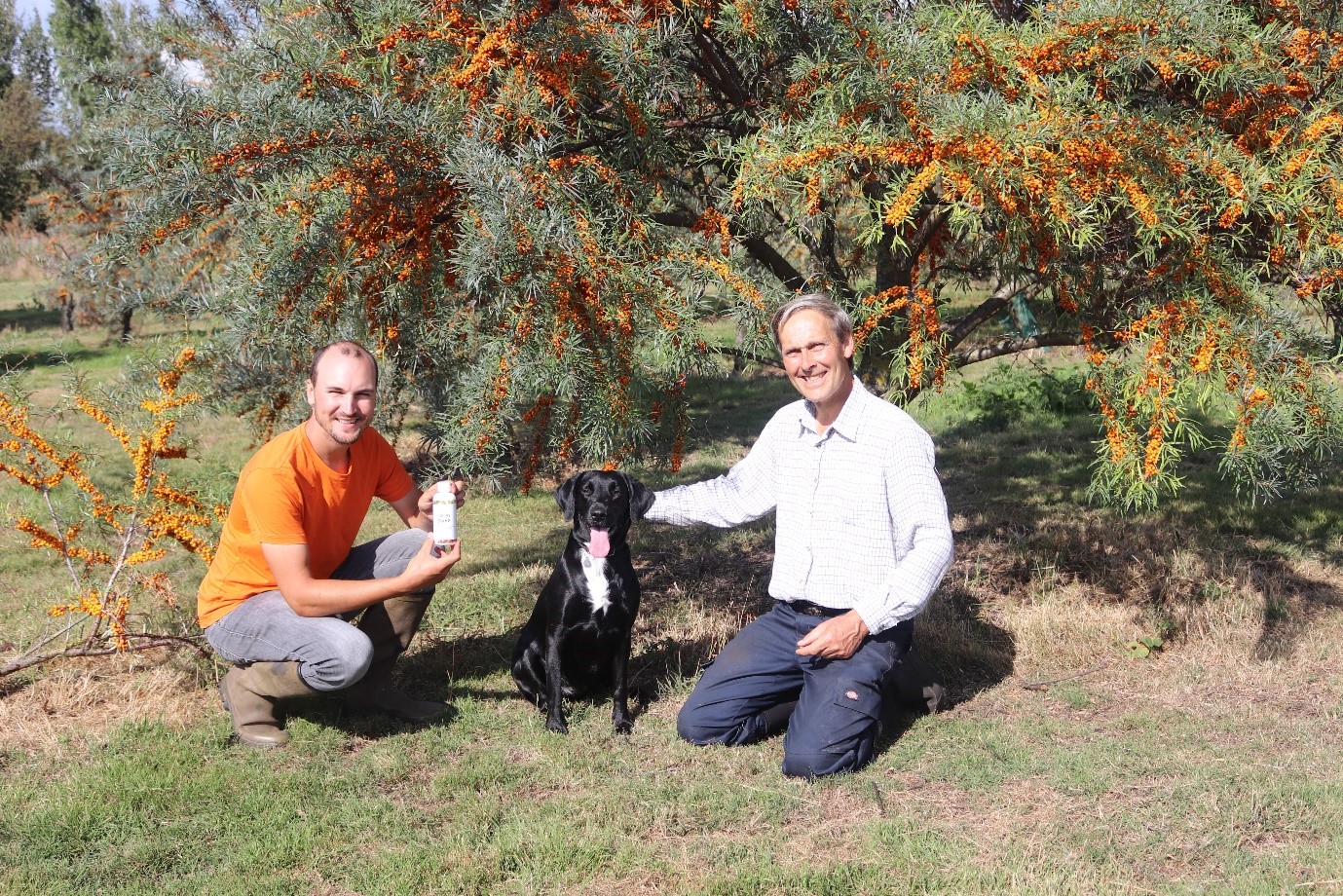
As a Registered Nutritionist passionate about natural, nutrient-packed foods for our best health, I’m privileged to be working with the team at The British Seabuckthorn Company.
My previous career as a Vet, began to teach me the power of nutrition for best health; my interest in small animal practice was always Dermatology – the treatment of skin disease. So, the Canine Shine project, just pure, natural seabuckthorn berries, a power-pack of nutrients for skin health, is an exciting journey!
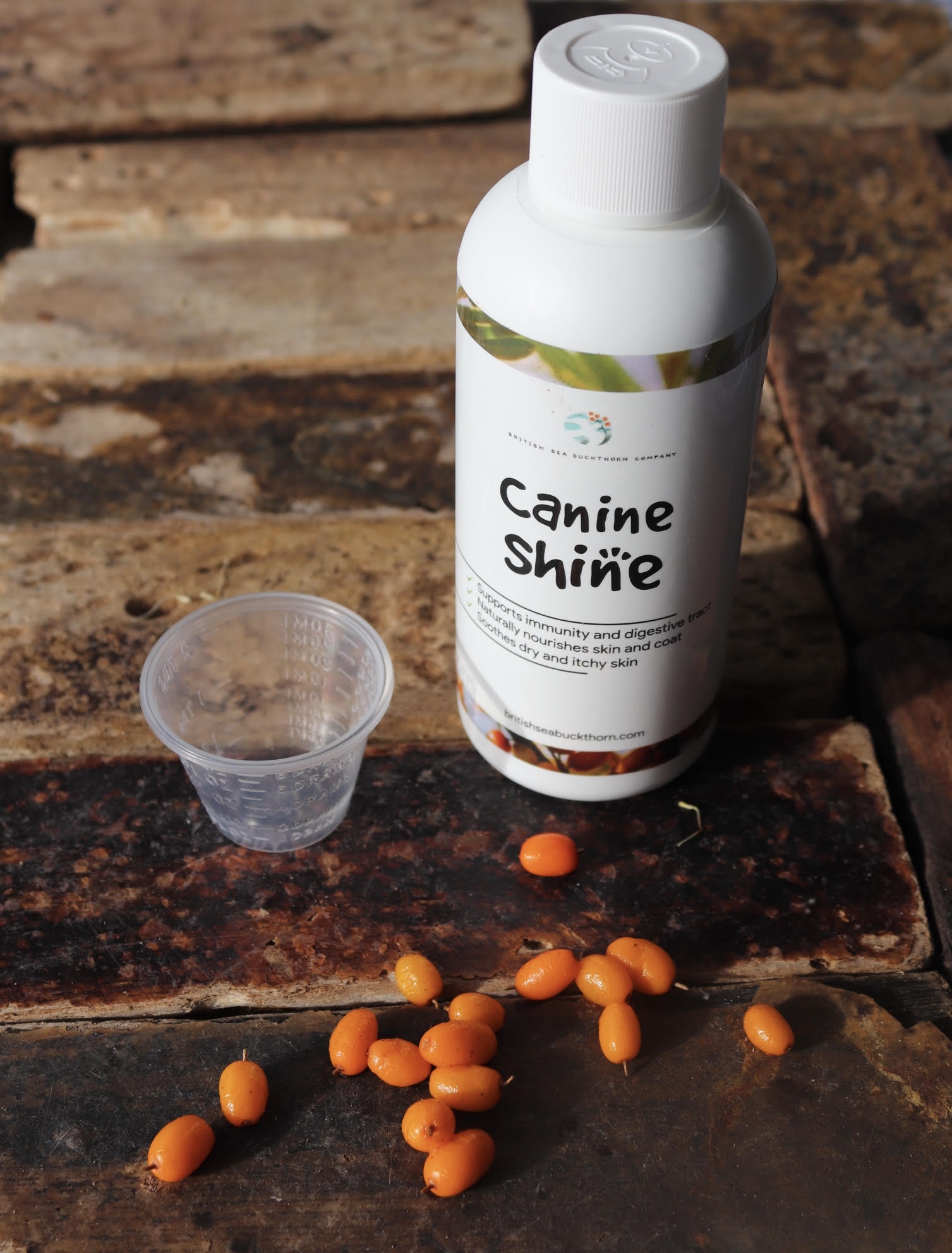 The Ancient Greeks named Seabuckthorn: ‘Hippophae’, which translates as ‘Shiny Horse’. We now know this is because it’s a rich source of many nutrients required in the every-day functioning of healthy skin.
The main oil within skin cells is an Omega 6 called GLA, which boosts blood circulation, hydrates and regulates inflammation within the skin. As well as being a source of this vital oil, Seabuckthorn is rich in Antioxidants and Vitamins A, B and E, all required to keep skin cells healthy, slowing the ‘ageing’ process.
We’re also beginning to understand the crucial role of our gut health in our overall health and wellbeing, thanks to rapidly increasing research. This process is just as vital in animals, with fibre and antioxidant-rich foods nurturing their beneficial gut bacteria. For animals, not all so called ‘prebiotic’ foods are equal – fruit fibre, as well as beet pulp, oats and barley can be especially beneficial to dogs1. Seabuckthorn is a great source of fibre and we’re continuing to explore its influence on gut health.
With feedback from dog owners on Canine Shine, so far being very positive not only for skin condition but general health and wellbeing too, why not treat our most loyal canine companions, & see for yourself, the benefits from nutrient-rich food in its most natural form!

A year on, and we are still thinking about that natural cycle, but life has changed. The natural cycle remains, but every customer now is a personal customer. We sell a very specialised fruit and every personal order values sea buckthorn so we need to nurture and ensure that quality is king.
The original concept of growing sea buckthorn was underpinned by its nutritional value. The historical context of it being valued as a traditional remedy for centuries added to its credibility. This tradition inspired plant breeders across the world to tame wild varieties. Wild or tame, the berries have the potential to be so much more than being a “little orange berry”.
As a grower we are committed to a natural cycle that provides a little more knowledge with every year that passes. We started with German and Finnish varieties back in 2009. These plants are now mature. The Finnish plants have been a challenge, but it was rewarding in 2020 when we could pick the variety Terhi for the first time. Like our Siberian plants, the Finnish ones did not enjoy our mild, wet weather. But success is sweet when it happens.
In 2012, with the help of the InCrops team at the University of East Anglia we imported our first Siberian plants. This was very exciting as these promised so much. Thornless, high yielding, better tasting, easier harvesting – the panacea of sea buckthorn growing.
In ten years we have seen only one crop of Siberian berries. Reality mellows initial enthusiasm, but not the determination to grow Siberian sea buckthorn. The consideration that moving plants across continents required them to adapt to a new climate and soil had not been factored into the original plan. 10 years on our learning curve has been steep and frustrating. Now in 2021 we are planting a new Siberian orchard with a new planting design to solve the barriers that have prevented Siberian success.
As we move forward in the orchard, we have been so fortunate to team up with Dr Lucy Williamson -who as a nutritionist is deciphering what sea buckthorn is.
Our fascination for sea buckthorn was driven by its nutritional potential. The 190 phytochemicals found in the berry drive the potential benefits, recognised over the centuries. We analyse our berries and the laboratory gives sheets of facts. Understanding what they mean is key to knowing what we are doing, why and how we can change our methods to improve berry quality.
Lucy’s speciality is gut health. This is not an area normally associated with sea buckthorn. We tend to think of health as a reaction to a disease or ailment. We should think more proactively of maintaining good health and this comes back to the ancient concept that food is health.
For food to be the driver of health it has to have the right qualities. Understanding what those are and why they are important is essential so as growers we focus on improving berry quality. Lucy is our key to developing the understanding of why sea buckthorn has the potential we believe it has. The gut is the place where our food is transformed into the vital nutritional building blocks the body needs. Understanding how it works is a new and complex science and with Lucy being specialist in this field will guide our focus as to how we grow to produce berry quality that relates to health.
Omega oils are involved in many every-day processes in the body, from transporting vitamins, making hormones and the correct functioning of cells, so they’re of huge importance in our overall health! Seabuckthorn is totally unique in the variety of health-giving Omega oils it contains, not just in its seeds but in the berries too. The seeds are especially rich in Omega 3&6, the two ‘essential fatty acids’ that we are totally dependent on our food for, while the soft parts of the berry are one of very few plants to contain valuable Omega 7. Omega 9 in seabuckthorn, is perhaps better known as Oleic acid, the beneficial fat in olive oil.
The nature of fat in our food depends on the types of fatty acids it contains – saturated and unsaturated. All fats contain both but in general plant oils contain more unsaturated (liquid at room temperature) and fats of animal origin contain more saturated (solid at room temperature). Including more plant oils in our diet is really beneficial for our health (1). Seabuckthorn, as well as being a rich source of Omega oils, also contains plant sterols, natural plant compounds which help to promote good cholesterol levels. It’s also a fabulous source of fat-soluble vitamins A&E. You can read more about all its other beneficial nutrients here but let’s concentrate on those Omegas!
Omega 3 is vital for the structure of our cell membranes which ensure the proper functioning of all our body cells. So, it’s easy to see why a diet rich in Omega 3 gives such wide-ranging health benefits from protecting against heart disease & regulating inflammation to giving our skin a healthy glow! For example, by keeping cell walls flexible, Omega 3 helps to keep blood pressure down (because the cells lining blood vessels stay stretchy) which in turn helps to maintain a healthy heart. The anti-inflammatory function of Omega 3 is especially important in preventing blood clots, (which increase the risk of stroke) but new research is starting to show other benefits such as improved bone density, better outcomes in auto-immune disease like Rheumatoid Arthritis and protection against Dementia in older age. It’s important to mention that there are two types of Omega 3 which are especially important for our vision, brain health and their anti-inflammatory function. These are EPA and DHA and are already present in oily fish. Plant Omega 3 however, needs to be converted by our bodies into these two forms before we can get the same benefits. So, if we’re relying on plants for our Omega 3, we need a lot! (2)
Omega 6 is high in the seeds of seabuckthorn, making up about 40% of the oils there! However, it also accounts for about a third of the oils in the berries too. Omega 6 in our food helps to maintain healthy cholesterol levels by raising ‘good’ HDL cholesterol and lowering ‘bad’ LDL cholesterol. It’s also the most abundant oil in our skin, so as well as promoting a natural glow it can help with acne, atopy and psoriasis. One particular type of Omega 6, GLA (better known perhaps as the beneficial oil in evening primrose oil and borage) is especially high in seabuckthorn and can help to regulate hormonal changes during menopause.
Getting the right balance…
It’s really important to strike the right balance of Omega 6: Omega 3 in our food. Our UK food intake surveys show us that on average most of us manage 6:3 at a ratio of 10:1 but 4:1 is far more beneficial for our health (3). British seabuckthorn contains a balance of 1:1 so provides a very welcome functional food to help us get a good balance.
Omega 7 is rarely found in foods; happily seabuckthorn berries are one of the very few, rich sources. Research has shown Omega 7 to be extremely effective in promoting healthy mucous membranes – the delicate lining of our respiratory and digestive systems. (4) This is one of the reasons why seabuckthorn pulp as a natural food supplement is very popular in preventing stomach ulcers in horses. Having practiced as a Vet before becoming a Nutritionist, I can safely say this is something they’re very prone to especially with the stress of racing. However, it’s the mix of over 190 nutrients in seabuckthorn which is thought to amplify the beneficial effects of these nutrients individually. No wonder then, being packed full of antioxidants like flavanols, Vit C, carotenes (Vit A) and tocopherols (Vit E), that seabuckthorn, having all these nutrients together, can be so beneficial against the long-term effects of stress on digestive health, the cardiovascular system and skin condition. Omega 7 may also be beneficial in Diabetes as it increases our sensitivity to insulin. (4)
Omega 9 is also present in high quantities in olive oil and there are now many links between the olive oil in a Mediterranean-style diet and protection against longer-term heart disease and cancer.
References